
Smartsheet is fast because it works the way a spreadsheet works, and every PMO that runs on it eventually builds one more sheet: the roll-up. It breaks the moment someone inserts a column. PPM Express reads your sheets into an enterprise portfolio with capacity, financials and risk attached, so the roll-up stops being a sheet somebody maintains.
No migration, no template rollout, no cross-sheet formulas to repair — and no lock-in: Smartsheet sits alongside Jira, Azure DevOps, Microsoft Project, Planner and monday.com in the same portfolio.


Columns, statuses and formulas are invented per sheet. Fifty sheets are fifty conventions, and no two of them answer the same question the same way.
Cross-sheet references and cell links hold the portfolio together until somebody inserts a column, renames a status or archives a sheet. The number keeps reporting, which is worse than breaking loudly.
You can build a risk sheet and a budget sheet, and many PMOs have. What a sheet cannot do is calculate whether the people exist across every project at once, or compare investments on the same terms.
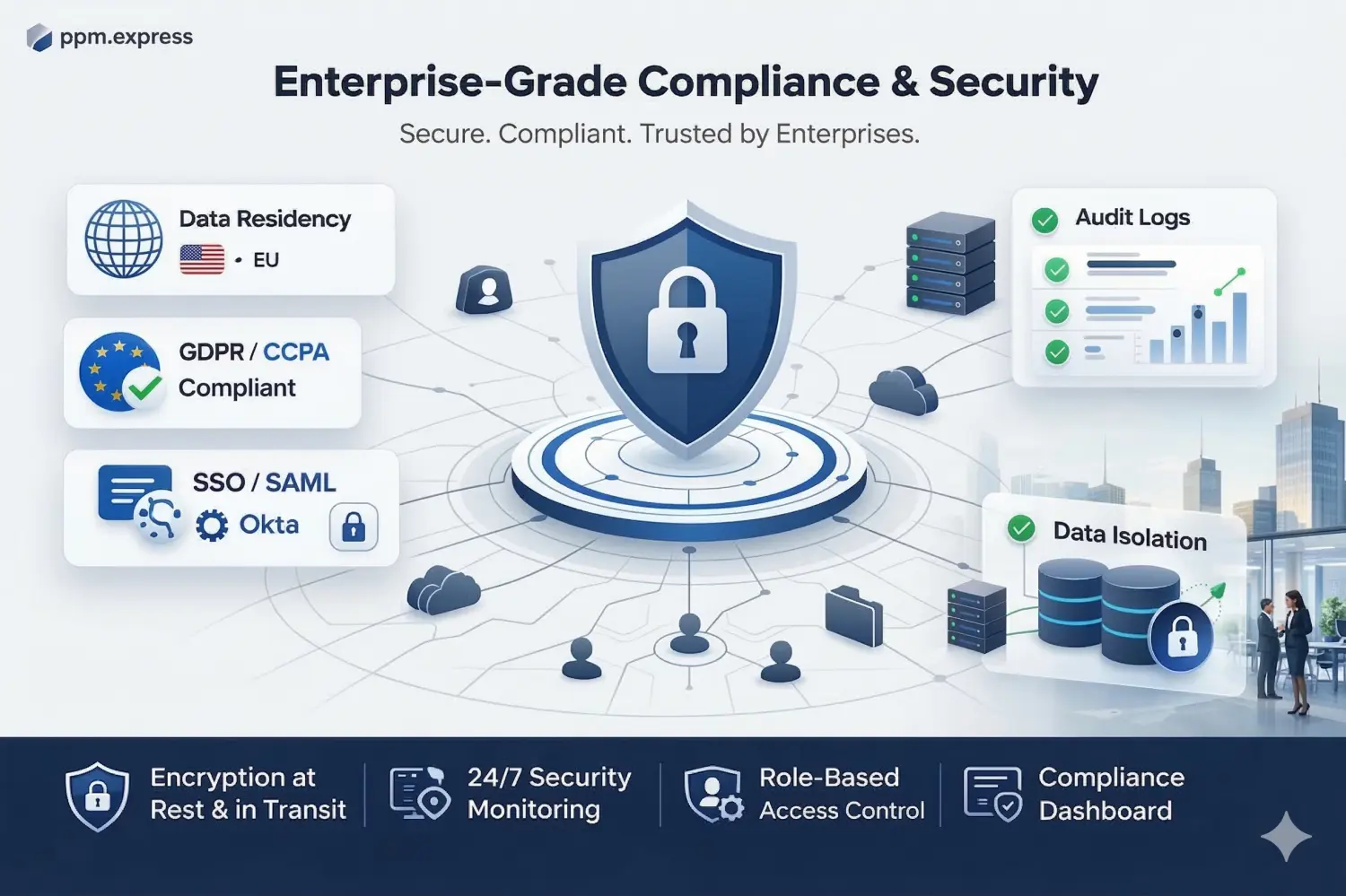
PPM Express reads Smartsheet work data only — sheets and rows with their owners, dates and status. No column is added, no formula is rewritten and no template is imposed on a project manager who already has one that works. Identity runs through Microsoft 365 or Okta SSO, so nobody manages another credential.
Smartsheet sheets and rows. Connect as many sheets as the portfolio needs and leave the rest to the teams that own them.
Your sheet structure. Nothing is written back, no column is created and no formula or cell link is touched by the connection.
Microsoft 365 or Okta SSO, with central user management and granular permissions.

Smartsheet multiplies quickly — every project, every request log, every tracker. Choose the sheets that represent funded work and leave the rest alone. Connecting takes minutes and changes nothing your teams see.
Map each connected sheet to a project inside a portfolio or program, and attach what a sheet cannot calculate: budget and forecast, benefits, strategic score, risks and issues, and the people who have to deliver it. No cross-sheet formula holds it together, so nothing breaks when a column moves.
Prioritise, fund and sequence in PPM Express, and test the result against the capacity you actually have. Your project managers carry on in Smartsheet and never see the machinery above them.
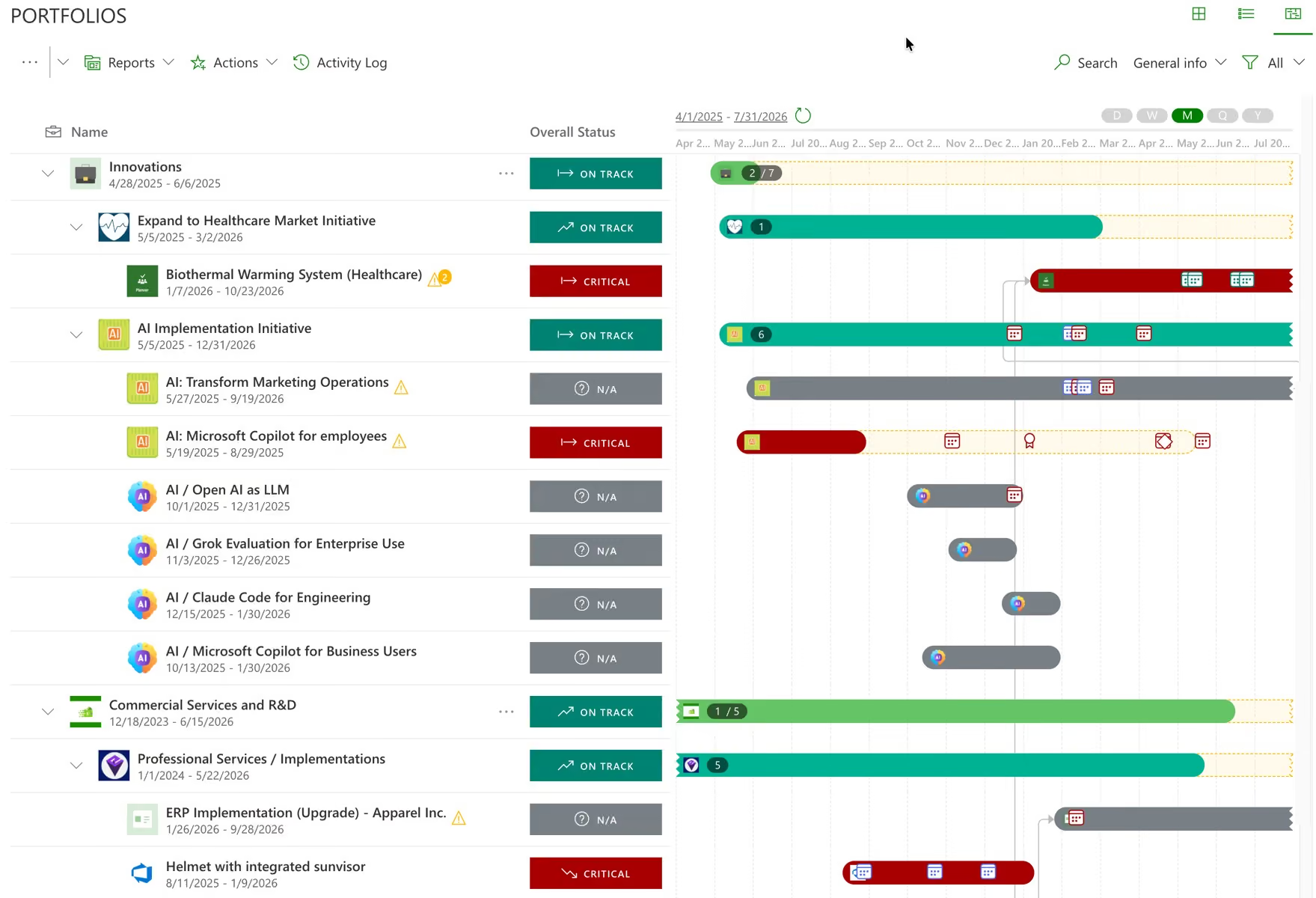
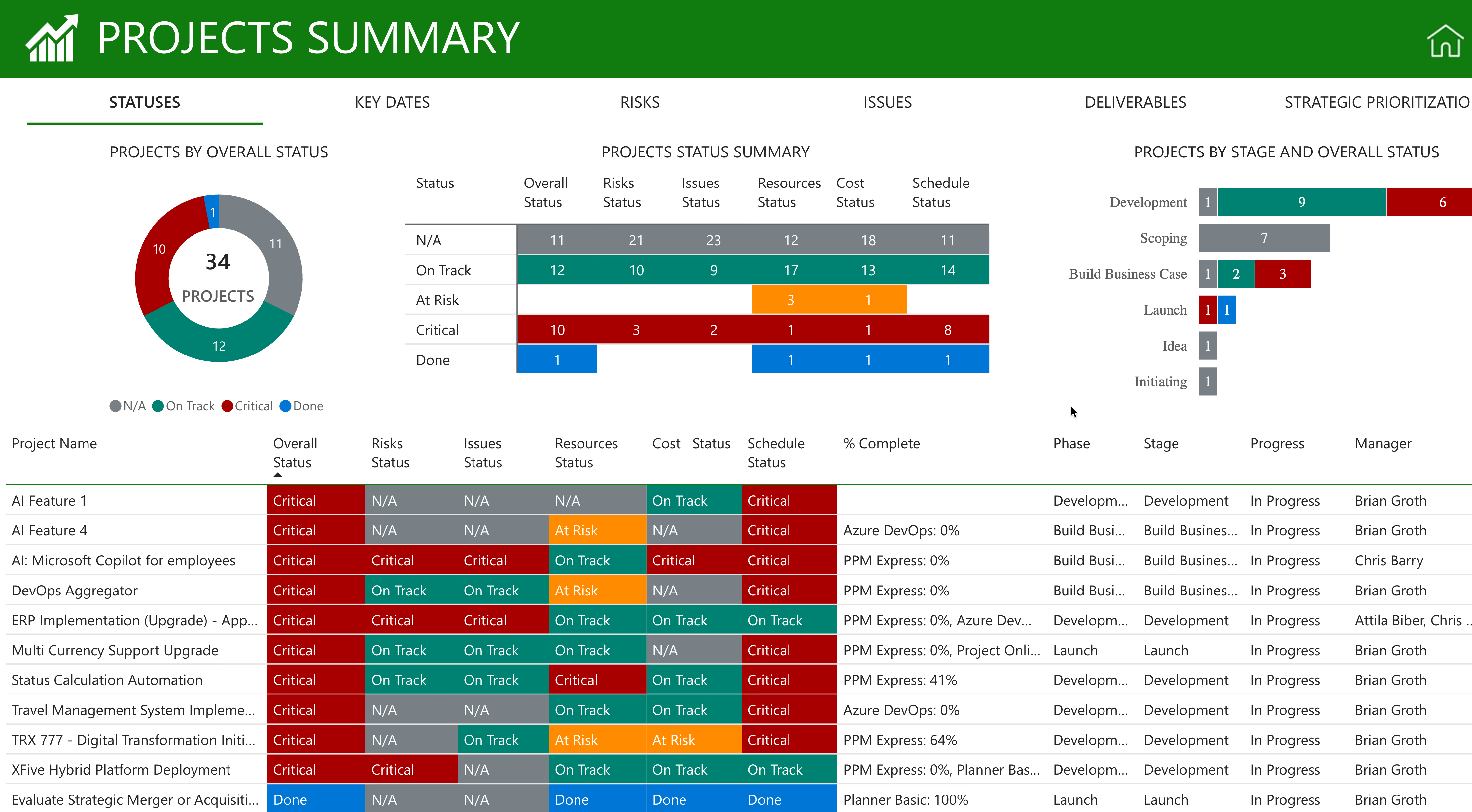
Connected sheets become projects inside portfolios and programs, described in the same terms whoever built them. Every project carries its status, timeline, budget, capacity and risk in the same row, so a portfolio review reads as one table rather than a folder somebody has to open sheet by sheet.
Portfolios, programs and projects above sheets that never agreed on a column name.
Status, dates, budget, forecast, benefits, capacity and risk, lined up so initiatives can be compared rather than described.
Read-only access for executives, sponsors and finance partners — without licensing each of them in Smartsheet to look at sheets they will never edit.
Progress is read from the rows your project managers are already updating: owner, dates and status. No cell links, no cross-sheet references and nothing to repair when a sheet is restructured.
The roll-up reflects what the sheets say now, and nobody has to own the formulas that used to make that true.
If dates or completion change after you have built an analysis, PPM Express shows exactly what changed and asks whether to take it, instead of absorbing it silently.
AI-written summaries drawn from live plan data, so project leads stop writing updates about work the system can already see.
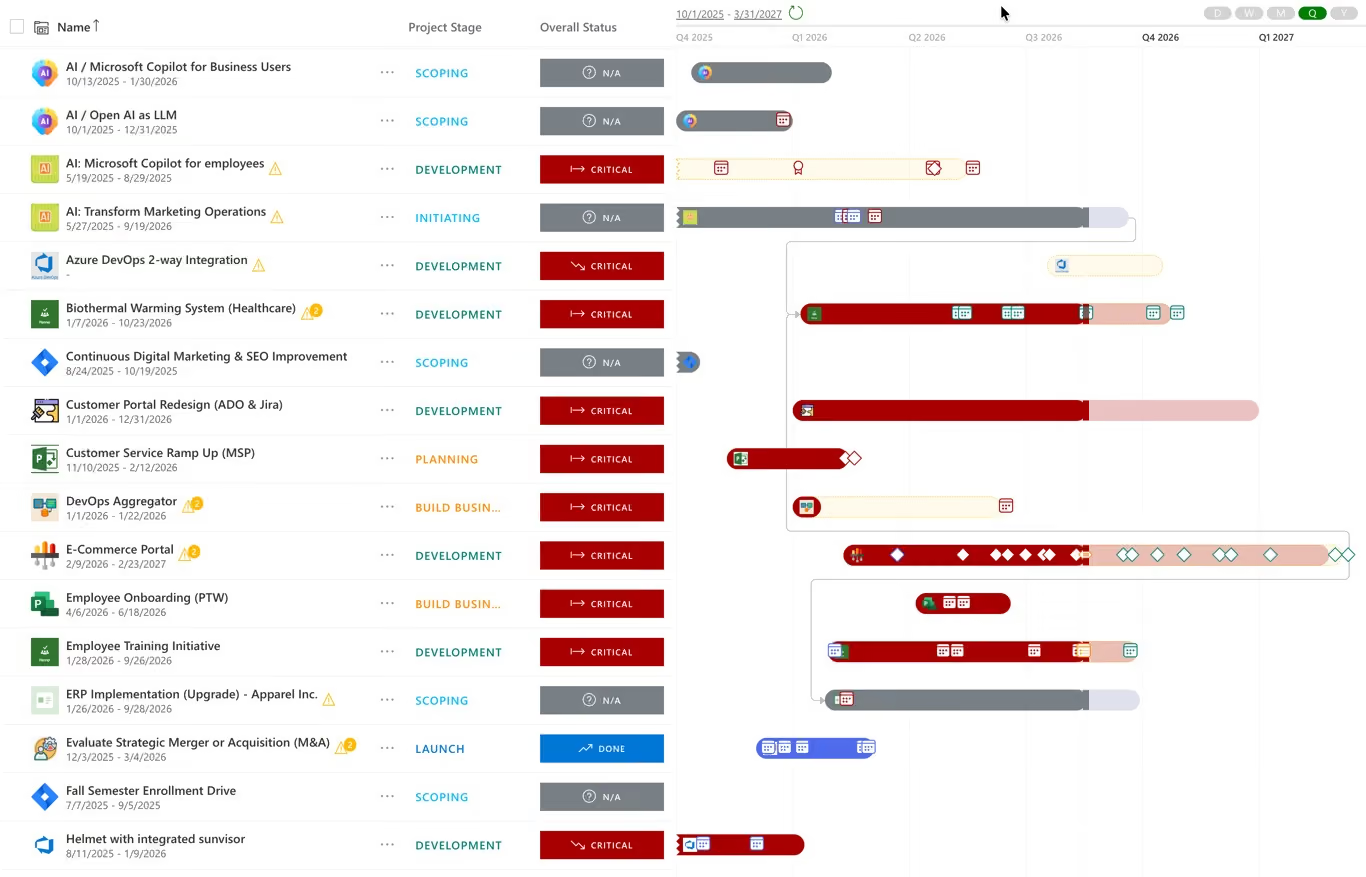
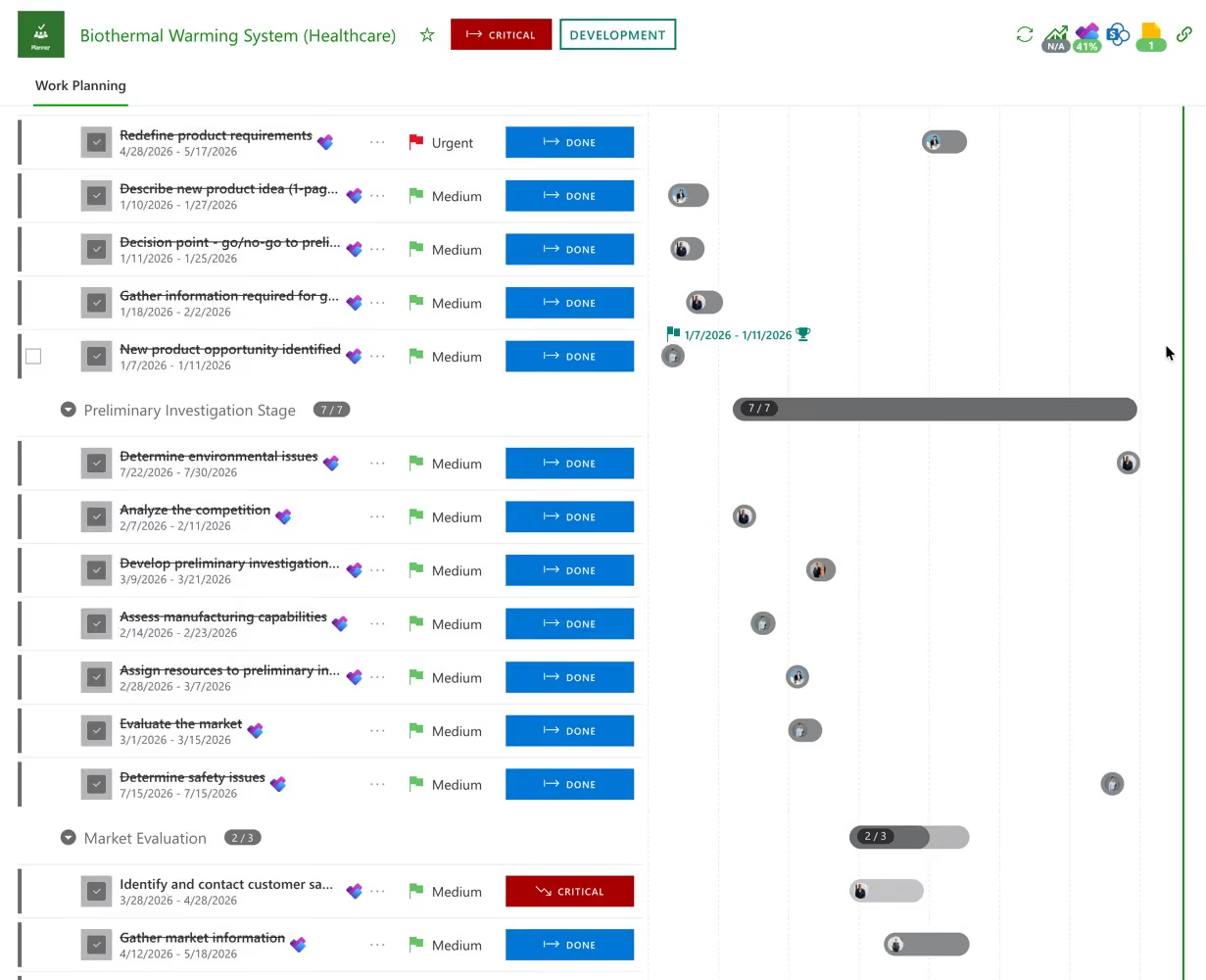
A sheet has a Gantt view of itself. What it cannot show is the dependency between your project and the one two folders away. PPM Express puts every connected sheet on one timeline with the dependencies and milestones between them, so the portfolio has a schedule even though each project manager plans their own way.
Projects and tasks on a single Gantt, with dependencies drawn between work that lives in separate sheets.
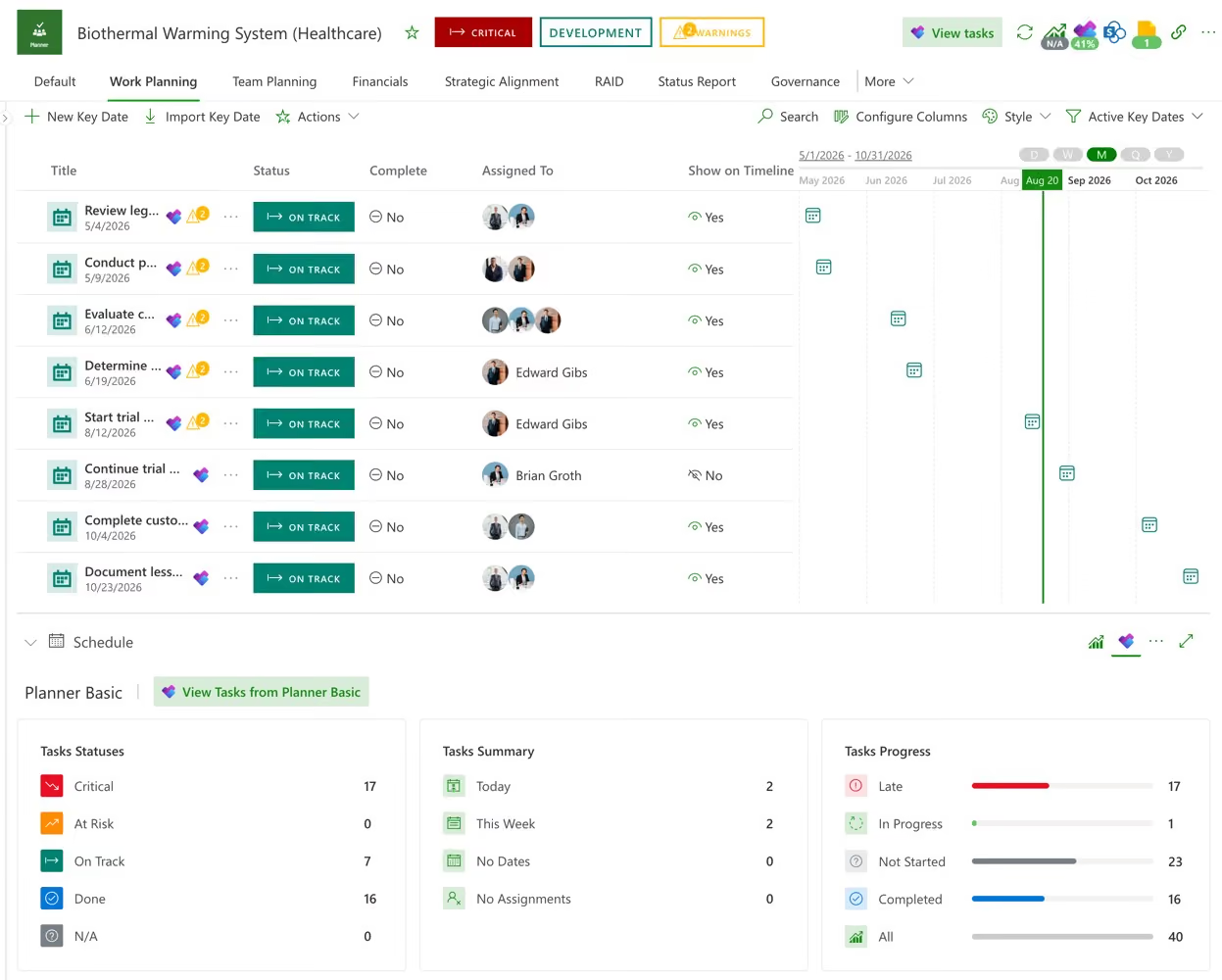
Milestones, owners and due dates in one place, updated once and reflected everywhere.
Built from live plan data, so when the work moves the roadmap moves with it instead of being redrawn.

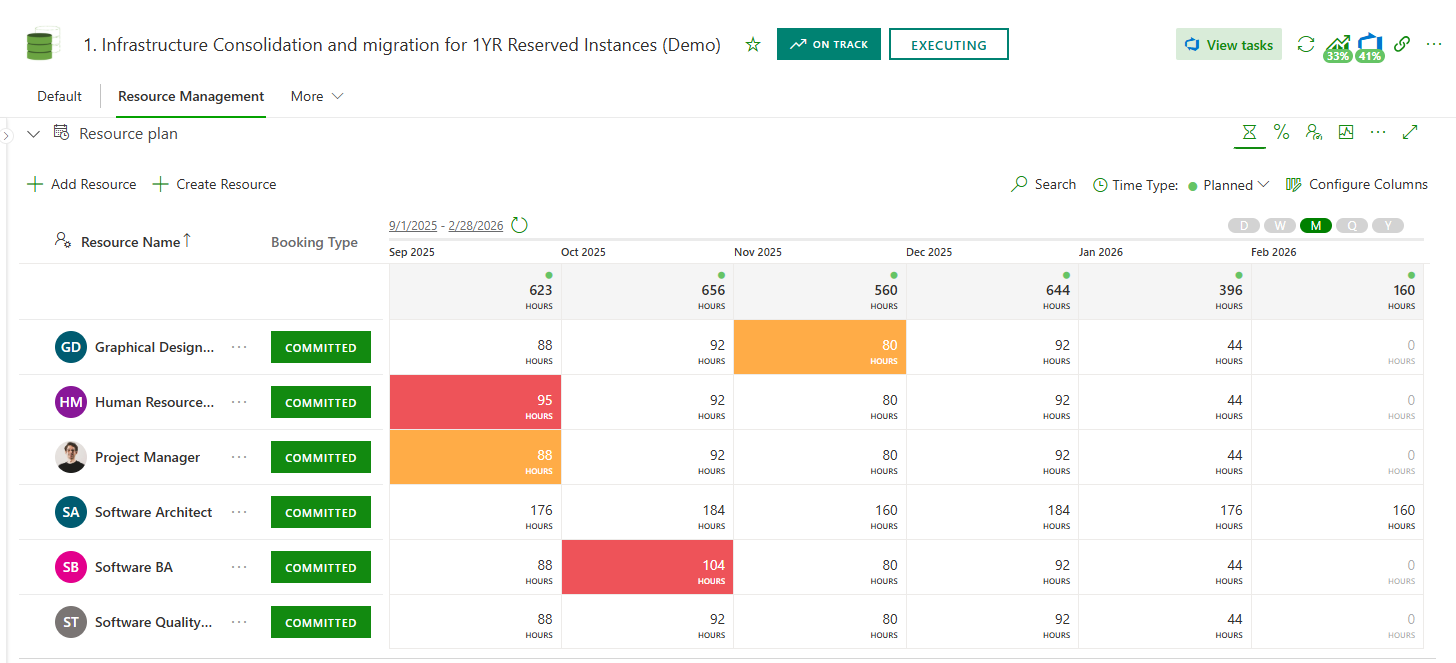
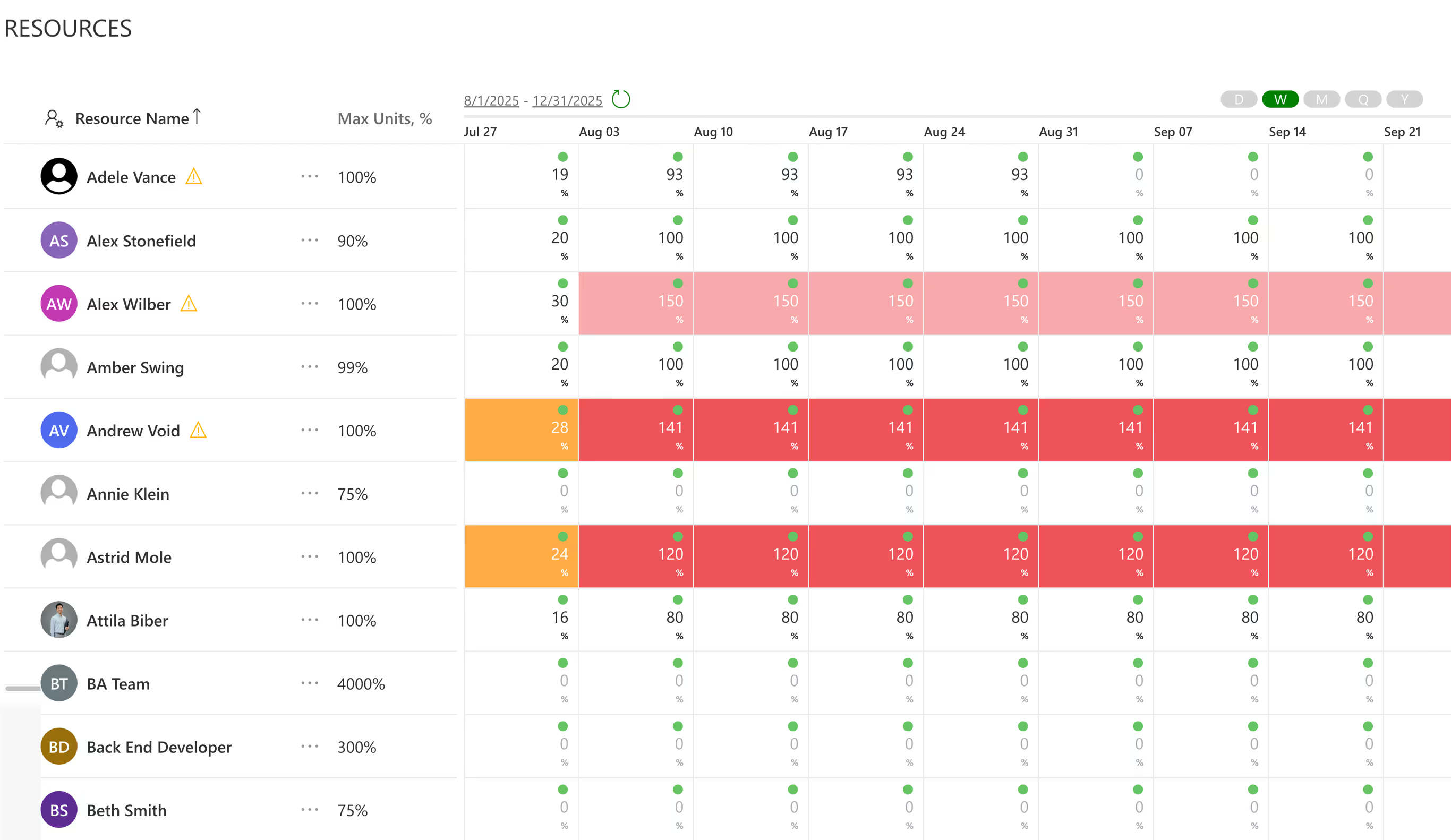
An assigned-to column tells you who owns a row, not whether that person is already committed on four other sheets. PPM Express adds resource capacity and utilization calculated across every connected project, budgets and forecasts against benefits, and a risk and issue register that rolls up — none of which a spreadsheet can hold honestly at portfolio scale.
Allocate people to initiatives in hours or percentage FTE, and read the pool as a table or a histogram before anything is committed.
Cost and forecast per initiative, tracked against the benefit it was funded to deliver — the conversation Planner cannot have.
A register per initiative, rolled up to the portfolio, so problems are visible before they are history.
Work managed in Smartsheet is reported next to everything else the enterprise delivers. Where other teams run Jira, Azure DevOps, Microsoft Project, Planner or monday.com, those roll into the same portfolio and the same reports — nobody migrates, and no team is told to abandon the tool that suits it.
Portfolio and project health, risks, issues, costs and capacity, ready to use rather than waiting to be built.
Smartsheet alongside Jira, Azure DevOps, Microsoft Project, Planner and monday.com.
For executives, sponsors and external stakeholders — the same numbers, without a rebuild for each audience.
The usual way to get portfolio reporting out of Smartsheet is to standardise every sheet on a template and link them together. It works until people edit their sheets, which they will. PPM Express reads the sheets as they are, builds the comparable layer above them, and if a team later moves to Jira or Microsoft Project, the portfolio does not change — only the connection behind it does.
Sheets and rows are read into PPM Express and nothing is written back. Smartsheet stays the single source of truth for the work, and the portfolio layer observes rather than intervenes — which is also the shortest path through a security review.
No new column, no cell link, no template forced on a project manager who already has one that works. If you disconnect tomorrow, every sheet is exactly as you left it.
Not every sheet is a project. Promote the ones that represent funded work and leave request logs, trackers and personal sheets where they are.
Sheet data only: sheets and rows with their owners, dates and status. Nothing is written back to Smartsheet, and no column, formula or cell link is altered by the connection.

Enterprises rarely run on one tool, and they should not have to. PPM Express lets Smartsheet stay what your project managers chose it for — fast, familiar, spreadsheet-shaped project management — while the portfolio above it carries programs, capacity, financials, risk and reporting at enterprise scale.
No migration project, no retraining, no vendor lock-in — and no argument with the teams about giving up a tool that works for them.
Adoption is the hardest part of any PPM rollout. Nobody has to be persuaded to give up a sheet they designed themselves.
Portfolio and program management, resource capacity, financials, benefits, risks and issues, and reporting that does not depend on anyone maintaining a formula.
If a team outgrows Smartsheet and moves to Jira or Microsoft Project, the portfolio stays put. Only the connection behind it changes.
Cross-sheet links hold the roll-up together, and only the person who built them knows why it broke.
Availability is guessed, budgets sit in a finance spreadsheet, and risks are recorded in a sheet nobody rolls up.
Every attempt starts with a template rollout and ends when project managers edit their sheets again.
Leadership reads the portfolio directly, and the monthly assembly job disappears.
Availability is calculated, budgets and benefits are tracked per initiative, and risks have an owner and a date.
The only people who need a PPM Express account are the ones asking portfolio questions: the PMO, sponsors, finance partners and leadership. Project managers stay in their sheets.

Every project, person and dollar in one live view.
Integrations

Capacity from real work weeks, so over-allocation surfaces before you commit.
Product

Test the portfolio against capacity before you commit.
Product
Last updated 20 August 2026
PPM for Smartsheet, answered.
Up to a point, and usually by building a roll-up sheet. Smartsheet is excellent at an individual project, but a portfolio assembled from cross-sheet formulas breaks whenever a sheet is restructured, and it still cannot calculate capacity across projects or compare investments on common terms. PPM Express provides that layer while the sheets stay where they are.
No, and that is the point. Sheets keep their own columns and formulas. PPM Express reads the sheets you choose to connect and maps each one to a project in the portfolio, so the comparable layer is created above the sheets instead of imposed on the people who own them.
One-way. Sheets and rows are read into PPM Express and nothing is written back to Smartsheet. Your sheets stay the single source of truth for the work, which keeps the connection simple to approve and impossible to disrupt.
The opposite. The portfolio layer is deliberately separate from the tool the work sits in, so different teams can use different tools and a team that outgrows Smartsheet can move to Jira, Azure DevOps, Microsoft Project, Planner or monday.com without the portfolio being rebuilt. Only the connection behind it changes.
You can retire it. The portfolio view is generated from the connected sheets themselves, so there are no cross-sheet references to maintain and nothing to repair when a project manager inserts a column or archives a sheet. Most PMOs keep the old roll-up running for a cycle, compare the two, and then stop updating it.
Sheet data only: sheets and rows with their owners, dates and status. Nothing is written back, and no column, formula or cell link is changed. Identity runs through Microsoft 365 or Okta SSO.
That is the normal case, and it is a common reason enterprises adopt PPM Express. Smartsheet, Jira, Azure DevOps, Microsoft Project, Planner and monday.com are all supported connections and roll into one portfolio. No group of teams migrates, and nobody maintains a sync layer between tools purely to produce a leadership report.
No. Project managers stay in their sheets and never open PPM Express. Accounts are for the people asking portfolio questions: the PMO, sponsors, finance partners and leadership. A portfolio tool that makes delivery teams maintain a second set of records is a portfolio tool holding stale data by the end of the quarter.
You decide which sheets are promoted into the portfolio. Request logs, trackers and personal sheets stay where they are; the ones that represent funded projects are connected and given an owner, a budget and a place in a program.
Yes. PPM Express is used by enterprises running hundreds of projects across multiple portfolios, with delivery spread across Smartsheet and other tools. Leadership works from live progress, capacity, cost and risk, with reporting automated across every portfolio rather than assembled for each review.
Usually because a cross-sheet reference is pointing at a column that moved, a row that was deleted or a sheet that was archived. The link keeps returning a value, so nobody notices. Reading the portfolio directly from the sheets removes that failure mode entirely, and when something changes upstream after you have built an analysis, PPM Express tells you what moved rather than absorbing it silently.
Sheets in one division, boards in another — both roll into the same portfolio. monday.com portfolio management
Detailed schedules in Microsoft Project, reporting into the same portfolio. Microsoft Project portfolio management
Capacity across every sheet and every schedule, calculated in one place. Resource capacity planning and utilization
Every system PPM Express connects to, and what each connection reads. All PPM Express integrations
Hosting, identity, permissions, and the data PPM Express never touches. Security and trust




.svg)


