Resource capacity planning and utilization across the portfolio

Most plans fail on people rather than on budget, and they fail quietly.

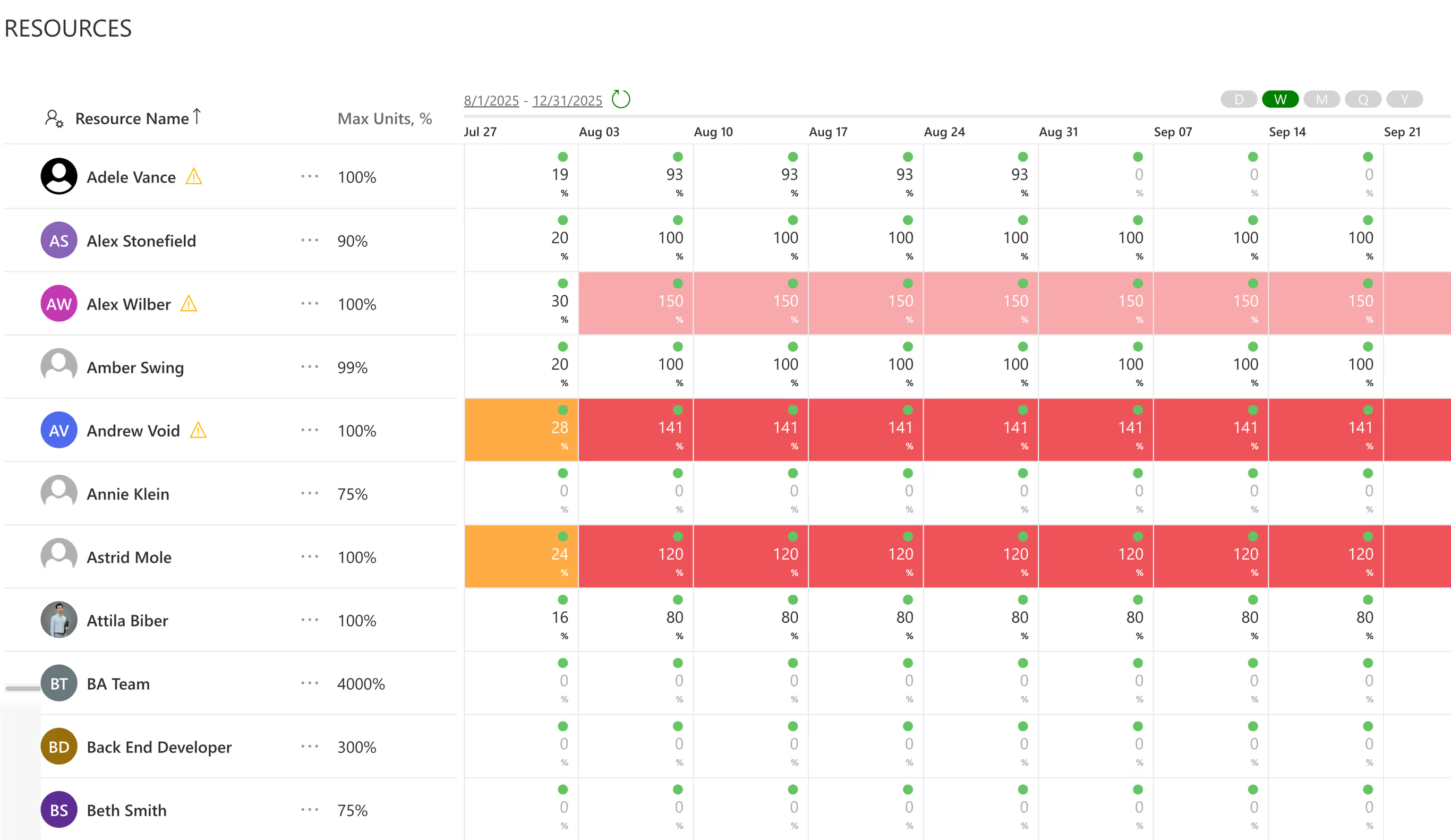
Resource planning software exists to make that failure visible while it is still a proposal. PPM Express calculates each person's capacity from their work week and calendar exceptions, then shows allocation against it in hours, percent or FTE. Overallocation is color-coded, so a plan needing more of somebody than exists is obvious before anyone commits to it. Resource capacity planning and utilization sit in the same view: planned effort, actual hours from time tracking, availability and what is left. You can filter by role, department or skill, which is usually how the constraint reveals itself.

No credit card required.
Resource capacity planning and utilisation across the portfolio in PPM Express
Microsoft logo
Customer logos: Microsoft and Bob Evans Farms
Customer logos: Evoqua Water Technologies and Fortescue
Customer logos: AHEAD and Hendrix Genetics
Customer logos: Sonesta and Green Thumb Industries
Customer logos: Nicolet National Bank and Messer
Customer logos: DHL and imec
USE CASES

Four people ask different questions of the same resource pool

Project Manager

Project manager: can I staff this plan with the people I have actually got?
  • See who is free, in hours or % FTE, before you commit to a date
  • Request a role now and name the person later, once the project is funded
  • Spot the developer who is fine this month and at 140% next month
  • Filter by skill, so the one person who has touched the billing integration is findable

Executive

Executive: where is our capacity actually going?
  • Read total demand against total capacity, by business unit or geography
  • Find the function quietly absorbing everyone else's demand
  • Know whether the next initiative needs a hire or a decision to stop something
  • Compare what was committed at funding against what people are carrying now

Resource Manager

Resource manager: who is over-committed, and by how much?
  • Forecast demand by role and skill, months before the request lands
  • Red for over capacity across a period, amber for the handful of dates that breach
  • Resolve a conflict by reallocating or rescheduling, in one view across every plan
  • Subtract support, meetings and admin before you count anyone as available

Portfolio Manager

Portfolio manager: can we deliver the portfolio we just approved?
  • Test an approved portfolio against people's free capacity, not their total capacity
  • See which projects collide on the same scarce team
  • Re-sequence work when a priority moves, and see who that frees up
  • Run the capacity check inside the funding decision instead of after it

Resource Capacity Planning and Utilization

Plan your teams across projects. Then know what's actually left.

Most enterprises don't have a resource problem. They have a resource visibility problem. The plan says the team has room. The team knows it doesn't. Both are looking at different numbers, and the gap only becomes visible when a delivery date slips.
PPM Express resource planning view showing planned versus available capacity by person across the portfolio

Team Planner

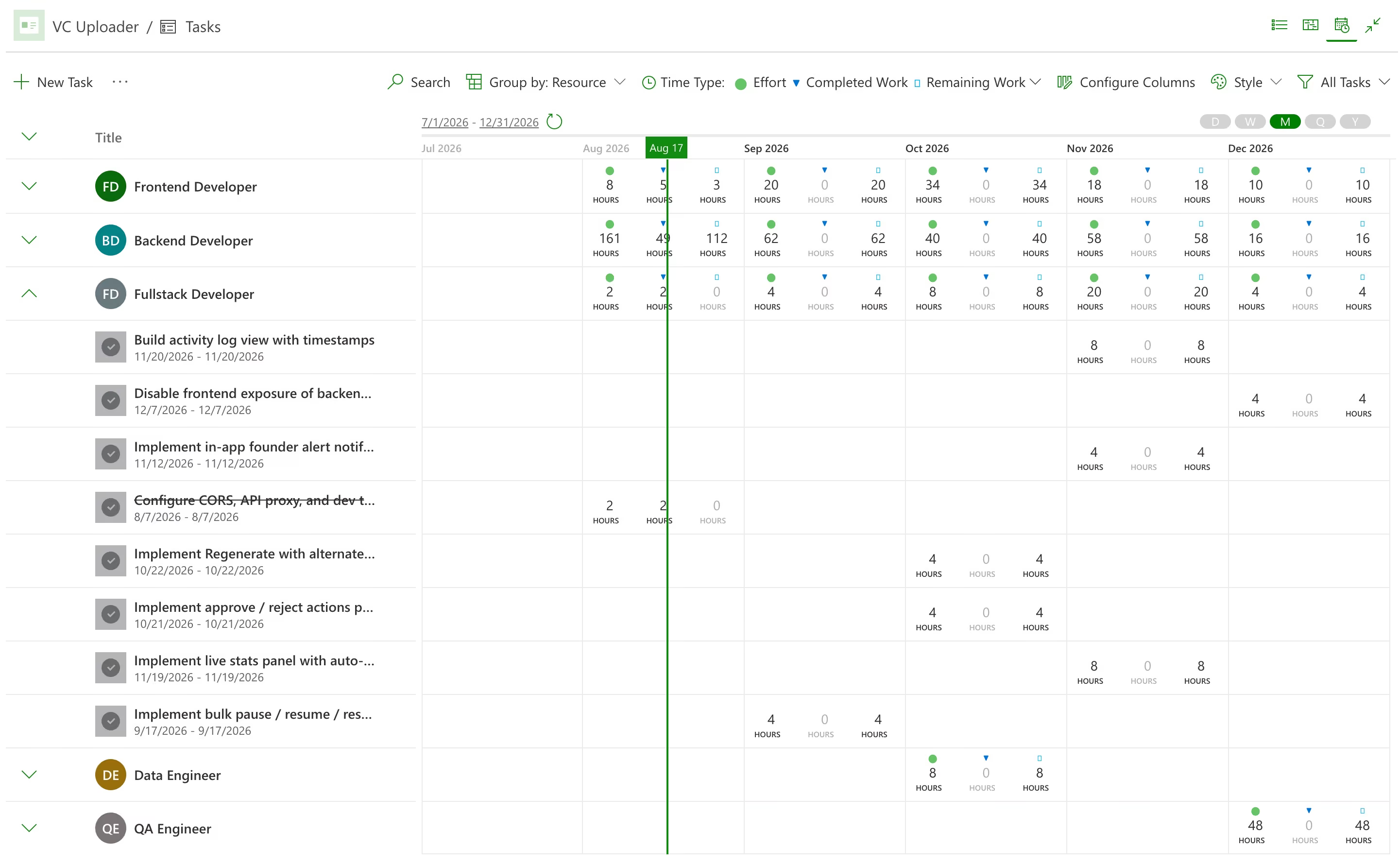
Fine-tune team workload on a project

Resource Details and Utilization

Account for Calendars, Skills, Role, Non-project Work and Non-working Time

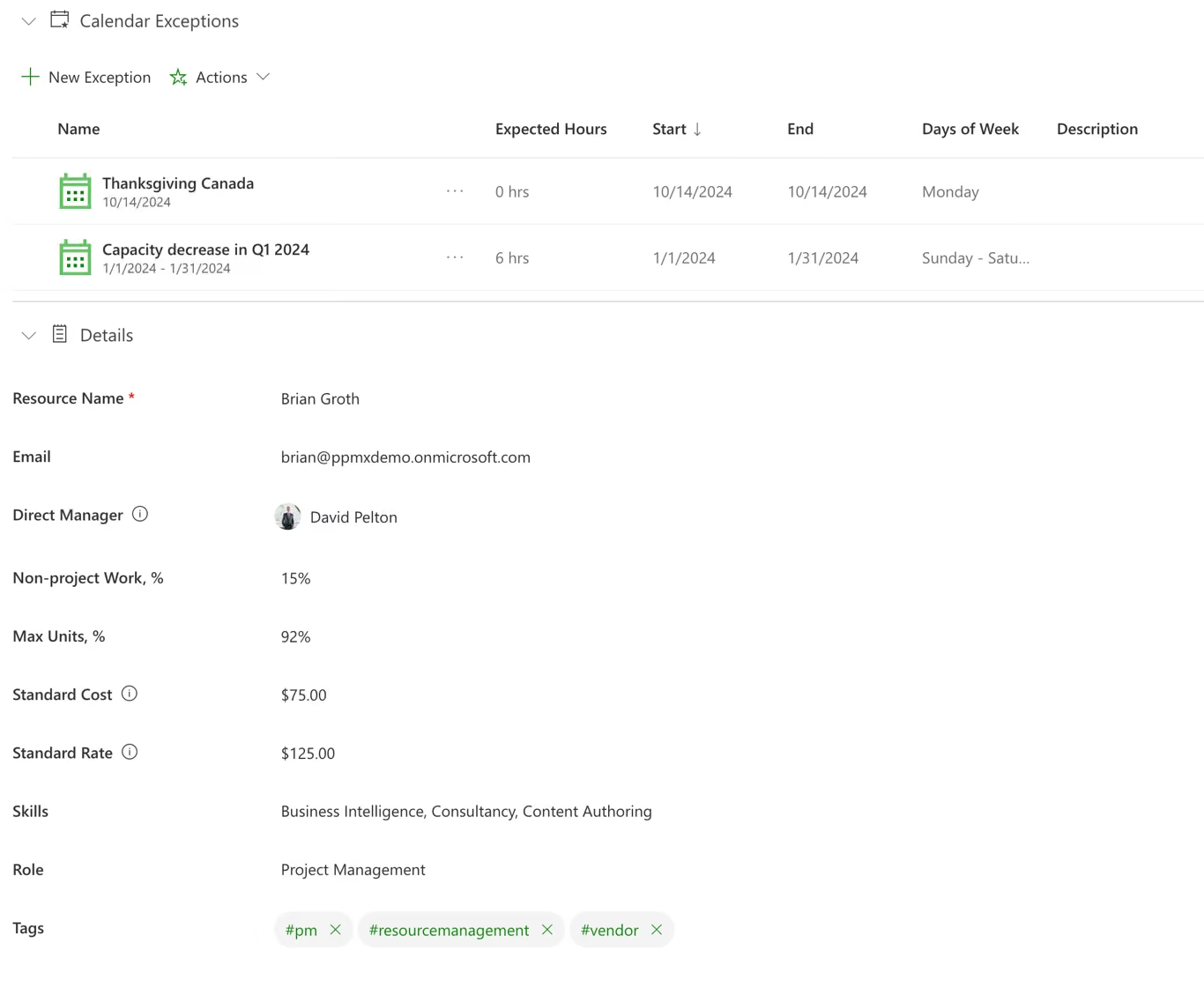
Nominal capacity is not real capacity. Roles let you plan demand before you've staffed it, and skills tell you whether the person you assigned is genuinely an option — three developers aren't interchangeable when only one has touched the billing integration. A non-project time ratio subtracts the support, meetings and administration that take their cut before project work starts, and calendar exceptions account for holidays, closures and part-time patterns. Without all four, a plan shows room in a quarter where nobody has an hour to spare.

250

Customers
use our software daily

100 hours

Saved every year
on monitoring state and statuses of projects, per PM

100K+

Projects
tracked on PPM Express Platform

EU & US

Data residency
Encrypted in transit and at rest. SSO, audit logs and tenant isolation. No customer data trains AI models.
Planning against real capacity in PPM Express, with existing commitments included

Plan against real capacity, not nominal capacity

A practical guide to capacity planning: what to measure, what to ignore, and why most utilization numbers are wrong before anyone looks at them.
Get Your FREE eBook

Getting to a capacity number you can defend

Most teams are working against real numbers inside two weeks. This is the order it happens in.
key features

What you can actually see

Capacity planning

Strategic resource allocation

Accurately forecast and plan your organizational resource needs with integrated demand analysis to strategically size your teams.
See plans
Capacity planning view in PPM Express comparing demand against available resource hours by role
Resource management

Optimal team utilization

Ensure your teams are sized, skilled, and leveraged optimally by managing resource allocation, utilization tracking, capacity modeling, and workload balancing.
See plans
Resource management view in PPM Express listing people, roles and current allocations
Financial management

Optimizing resource spending

Track resource costs and identify opportunities to optimize resource utilization and reduce project expenses.
See plans
Portfolio financial view in PPM Express comparing budget, forecast and actual cost
AI-enhanced insights

Smart resource planning

Enable intelligent resource allocation with AI-generated inisghts, capacity data, and data-backed assignment recommendations.
See plans
AI-enhanced insights in PPM Express flagging slipping milestones and capacity risk
Performance insights

Real-time reporting

Report on utilization, skills and performance across the pool: who is stretched, which skills are short, and where next quarter's gap opens up.
See plans
Portfolio performance insights in PPM Express with trend charts by programme
Skills management

Aligning talent to initiatives

Track what each person can actually do, so staffing a project is a search rather than a guess. Three developers aren't interchangeable when only one has touched the billing integration.
Skills and role matching in PPM Express when staffing a project
What Our Clients Say
PPM Express transformed our approach to academic program management. Faculty collaboration improved dramatically, our accreditation processes are streamlined, and student success analytics help us identify at-risk students before they struggle."
Natalie Wellington
Higher Education
Director of Academic Programs
Arrow right
Arrow right

Our Trial process is Fast and Simple as 1-2-3:

Step 01/
Discovery

Quick, 15-20 minutes call to understand your objectives, requirements, expectations.

Step 02/Demo

Personalized, 60-minutes demo of PPM Express to show how it can support your use cases.

Step 03/Trial / Pilot

30-day long, supervised FREE Trial / Pilot to experience PPM Express firsthand. + Free Onboarding
The PPM Express trial path in three steps: a short discovery call, a personalised demo, then a supervised 30-day pilot

Learn More

Last updated 20 August 2026

PPM FEATURES

Access More Features of PPM Express

Integrated PPM

Projects and portfolios in one place, with two-way sync to Jira, Azure DevOps, Microsoft Project, Planner, Smartsheet and Monday.com.
Discover

Work Management

Tasks, boards and schedules from every delivery team, rolled up without asking anyone to change tools.
Discover

PPM Reports

200+ prebuilt Power BI reports, including Resource Management Overview and Resource Details.
Discover

Ideation & Innovation Management

Capture ideas against a business challenge, score them against criteria agreed in advance, and turn the survivors into projects in the same system.
Discover

Resource questions

What resource managers ask first

Frequently asked questions

Resource Management, answered.

What is resource planning software?

A tool for matching the people you have against the work you have committed to. The useful ones calculate real capacity rather than assuming a headcount, show what is already allocated, and flag conflicts before a plan is approved instead of reporting them afterward.

How is resource capacity actually calculated?

From each person's work week and their calendar exceptions. That means shift patterns, part-time arrangements, holidays and shutdowns are reflected rather than averaged away. It is the difference between a capacity number you can put in front of a business unit and one that gets argued with.

What is the difference between allocation, capacity and utilization?

Capacity is what a person has available. Allocation is what has been committed to them. Utilization is the relationship between the two, and the one leadership usually asks about. PPM Express shows planned, capacity, actual and availability together so the comparison does not have to be done in your head.

Can we plan with generic resources before naming people?

Yes, and it is usually the right sequence. Generic resources let you plan by role and set maximum units, so a marketing resource can be modeled at 300 percent to represent three people. When the plan firms up you assign named people and set individual values. Resources start in a proposed state and are committed when the decision is made.

Can we see utilization in FTE as well as hours?

Hours, percent, FTE or chart view, whichever suits the conversation. Hours work for a delivery lead, FTE works for a finance partner, and being able to switch without exporting anything removes a surprising amount of friction from resource meetings.

How do actual hours feed the resource views?

Team members record time against tasks, and those actuals appear on the resource dashboard alongside planned effort. Planned against actual is where estimating problems surface, and it is far more useful than either number on its own.

Can we plan resources at portfolio level rather than project level?

Yes. The resource planning level is configurable across project, program and portfolio. It is a tenant-wide setting rather than something you mix, so it is worth deciding deliberately: portfolio-level planning suits organizations allocating people to themes, project-level suits those committing them to specific deliverables.

How do we spot overallocation before we commit to it?

Test the plan against capacity while it is still a scenario. Overallocation is flagged before anything is committed, and the color coding makes the pattern obvious: the same small group of specialists appearing across several plans, each of which looked entirely reasonable on its own.