
PPM Express reads your Jira projects, epics, stories and sprints into one enterprise portfolio, with budgets, benefits, timelines and real capacity attached. Squads keep their boards, their sprints and their workflow. Leadership stops waiting for a deck.
Used by enterprises that run delivery in Jira and govern it in one portfolio alongside Azure DevOps, Microsoft Project, Planner, Smartsheet and Monday.com.


Boards roll up to a team and epics roll up to a project. Neither rolls up to a program, a portfolio or a budget line, so the people choosing what to fund next quarter are reading a view built for the people closing this sprint.
Somebody exports epics to CSV, pastes them into a deck, colours the statuses and writes the commentary. It costs days, it is out of date the moment it is sent, and engineering time pays for it.
A quarter is planned against story points rather than against people who are already committed to two other squads. The collision surfaces in delivery instead of in planning.
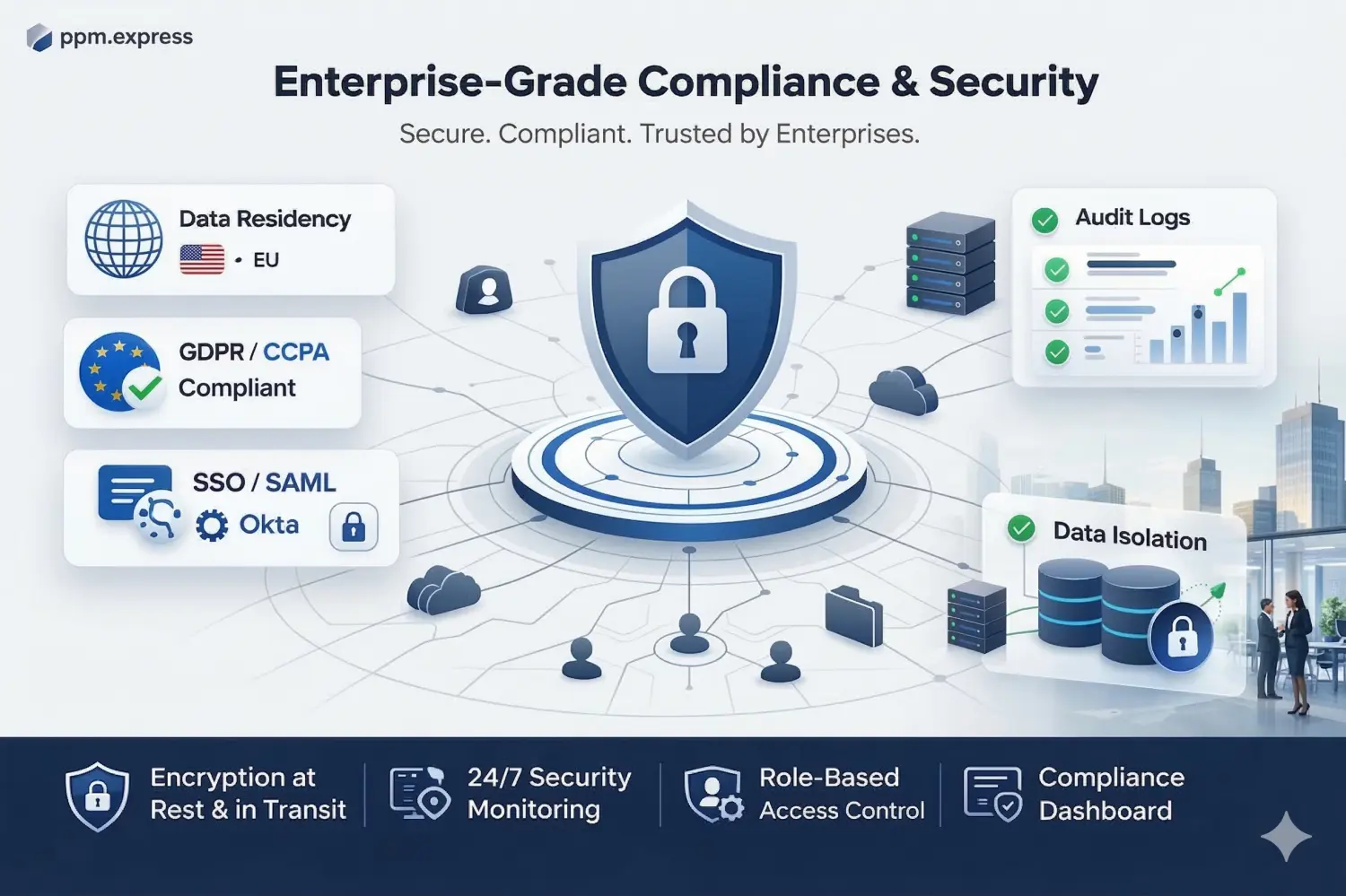
PPM Express connects to Jira work-tracking data only — epics, stories, tasks, sprints, dates, effort and progress. A project in PPM Express can be mapped to any set of Jira issues: a single epic, several of them, or an entire sprint or release. There is no connection to Bitbucket, no access to Confluence and no access to attachments, which tends to shorten the security review considerably. Identity runs through Microsoft 365 or Okta SSO, so nobody manages another credential.
Jira Cloud. The self-hosted products, Jira Data Center and Jira Server, are not supported — better established now than during implementation.
Bitbucket, Confluence and issue attachments. The longest part of most Atlassian security reviews simply does not apply.
Microsoft 365 or Okta SSO, with central user management and granular permissions.

Run the connection one-way, with Jira feeding the portfolio, or two-way, so agreed changes reach the backlog. Decide per connection which system owns which field, and leave the boards authoritative where they should be.
Group Jira projects into the structure leadership actually manages — portfolios, programs, initiatives — and attach what a tracker does not hold: budget, forecast, benefits, strategic score and risk.
Test a proposed quarter against calculated capacity, drawn from the work week and calendar exceptions recorded for each person. Publish the decision, and let it reach the squads instead of stopping at the steering committee.
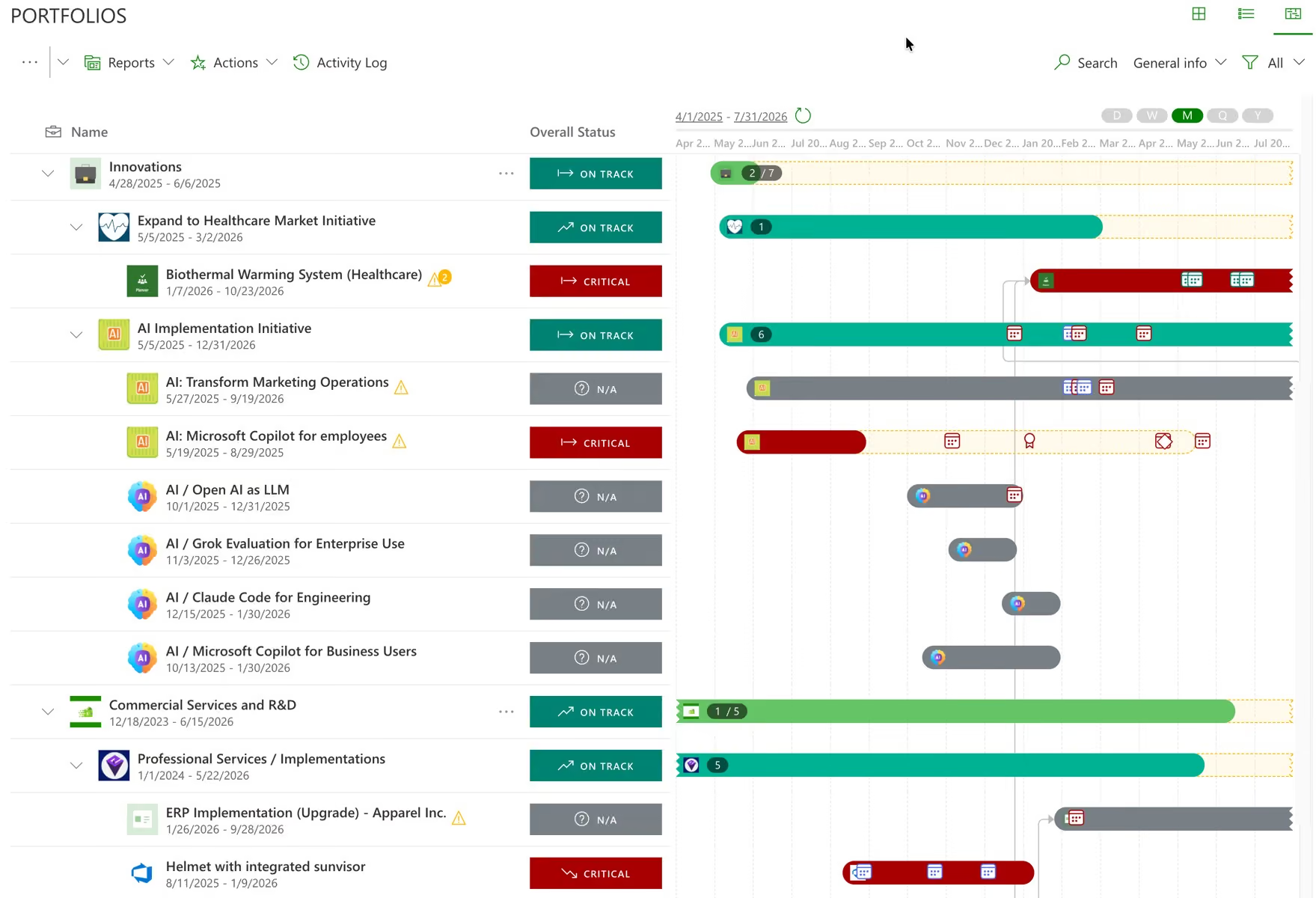
Jira projects become portfolios and programs with the structure your organization is actually run by. Every program carries its status, timeline, budget, capacity and risk in the same row, so a portfolio review reads as one table rather than fifteen browser tabs.
Portfolios, programs and initiatives above the Jira projects your squads deliver in.
Status, dates, budget, forecast, benefits, capacity and risk, lined up so programs can be compared rather than described.
Read-only status access for stakeholders, so the portfolio is something they open themselves rather than something you send them.
Advanced Roadmaps will tell you when the epics land. It will not tell you whether the initiative deserved its budget, which objective it serves, or whether the promised benefit ever arrived. Project portfolio management tracks the delivery; strategic portfolio management governs the choice. PPM Express adds both above Jira Cloud, without moving a single issue. What strategic portfolio management covers.
Jira projects roll into investment categories that carry their own budget — growth, run-the-business, compliance, technical debt — so a mandatory program and a discretionary bet stop competing in the same queue.
Weighted scoring criteria you configure yourself, with every score traceable back to its inputs, so “why is this above that” has an answer that survives a steering committee.
Money released in stages, each gate an explicit decision to continue, change or stop — and the business case still attached long after the last story is closed.
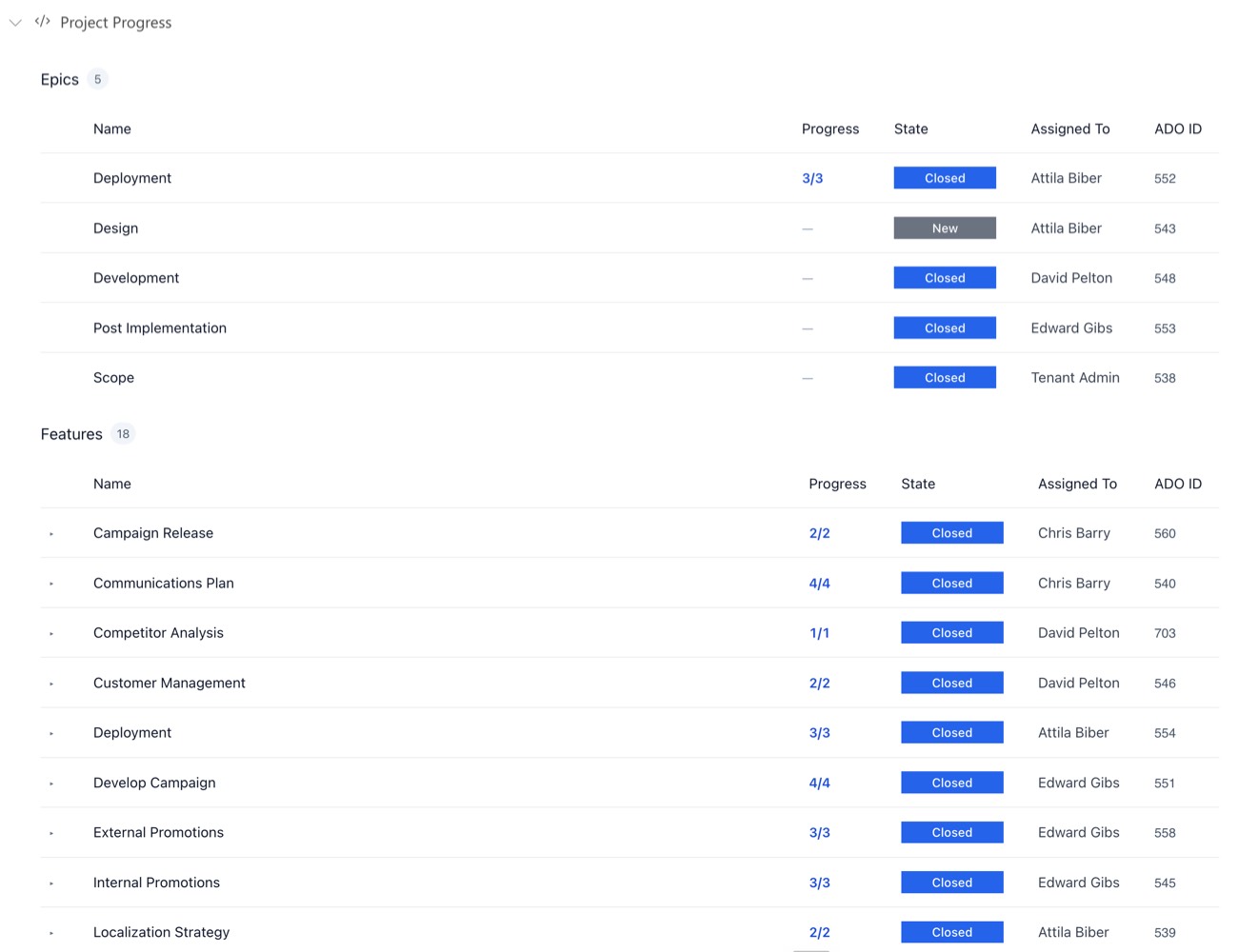
Progress is read from the epics and stories your squads are already updating: status, percent complete, dates and assignee. Nothing is exported, and the portfolio cannot drift from Jira because it is not a copy of Jira.
The roll-up reflects what the boards say now, not the moment somebody last built a spreadsheet.
If numbers move upstream after you have built an analysis, PPM Express shows exactly what changed and asks whether to take it, instead of absorbing it silently.
AI-written summaries drawn from live Jira delivery data, so delivery leads stop writing updates about work the system can already see.
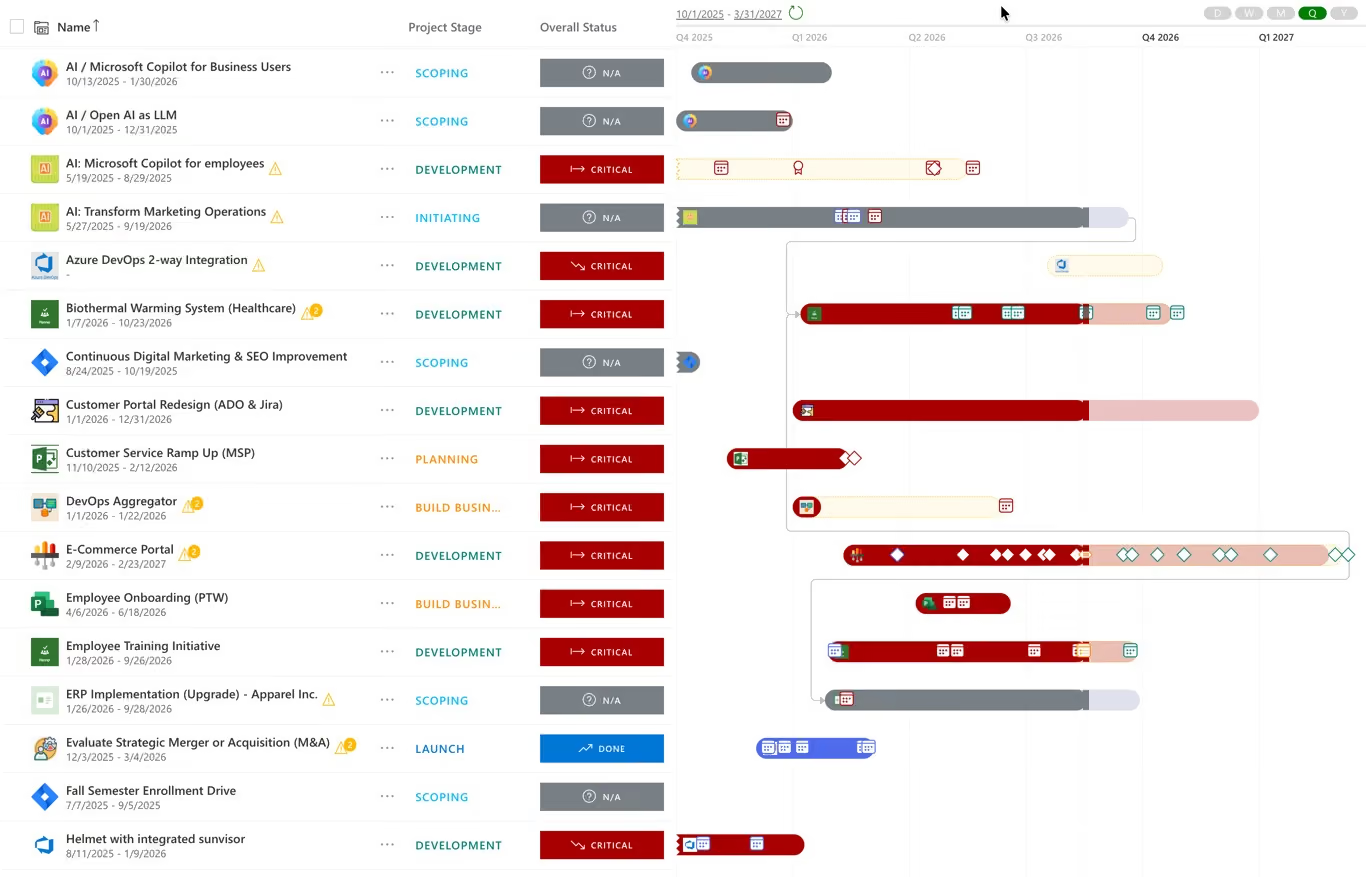
One Gantt across projects, epics and stories, with dependencies and milestones on it. Sprints, releases, effort and cost sit in the same picture, so the roadmap and the boards cannot tell two different stories.
Projects, epics and stories on a single Gantt with dependencies drawn between them.
Every milestone, owner and due date in one place, updated once and reflected everywhere.
Built from live delivery data, so when the work moves the roadmap moves with it instead of being redrawn.

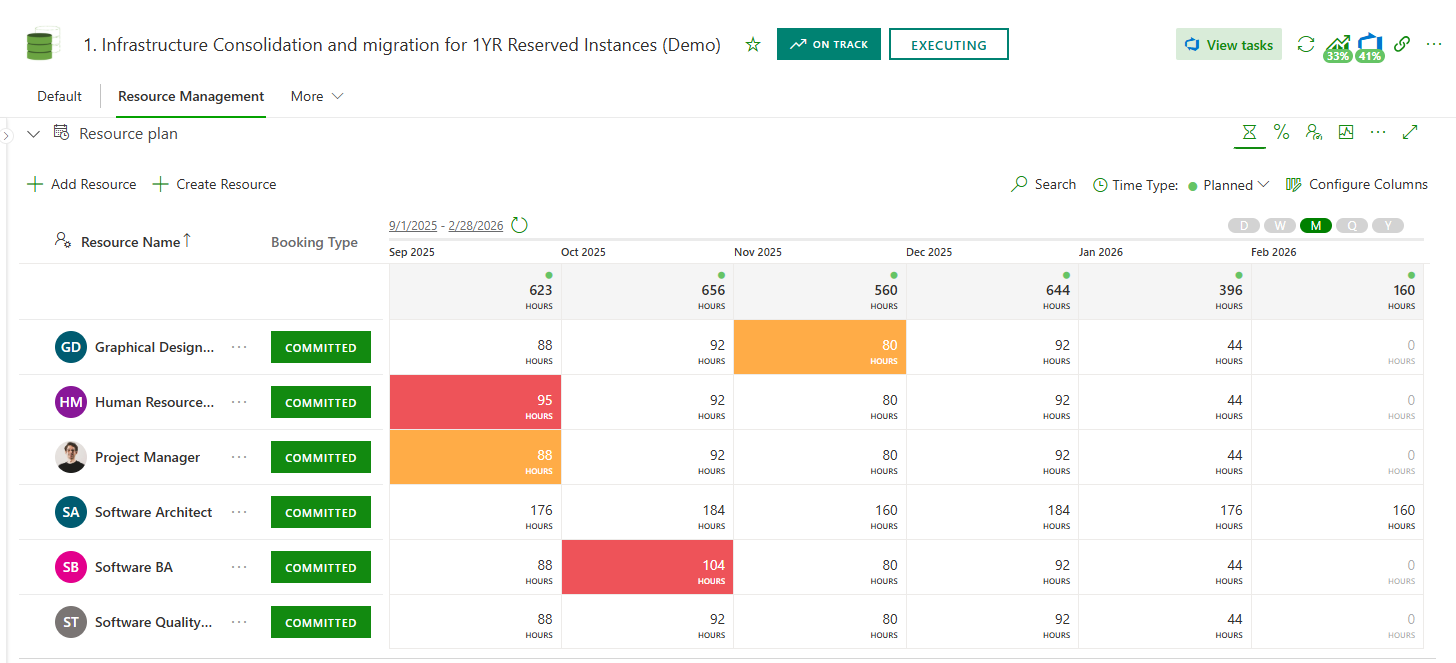
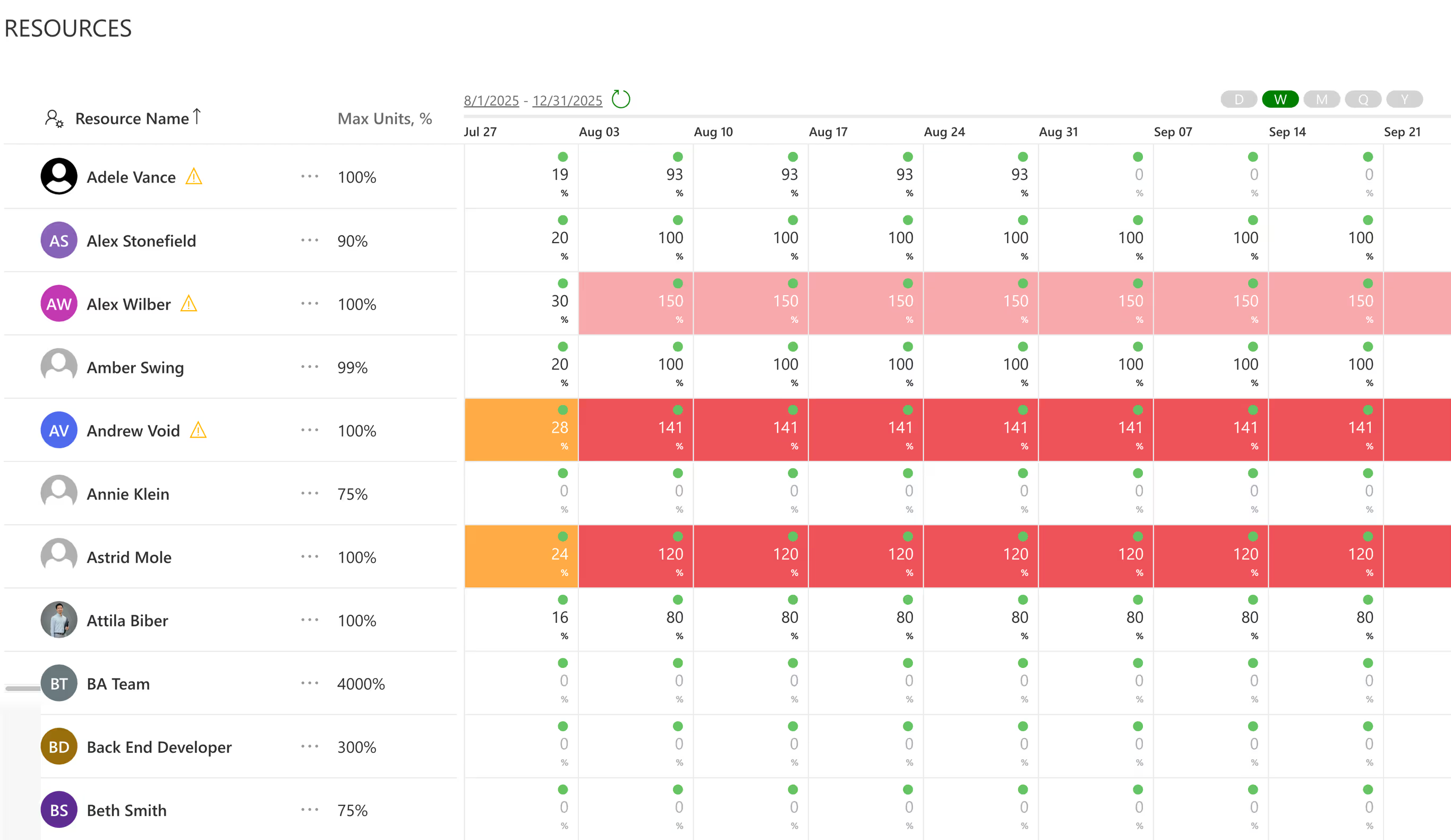
The constraint in a Jira estate is almost never backlog size — it is the same specialists appearing in three plans. Allocate people to epics and initiatives in hours or percentage FTE, read the pool as a table or a histogram, and find the collision while the quarter is still a proposal.
Allocate resources to Jira epics and initiatives across projects in one pass.
Calculated from the work week, calendar and calendar exceptions recorded for each person, not from an assumed eight-hour day.
“When will it be done” becomes “here is what would have to move for it to be done then”.
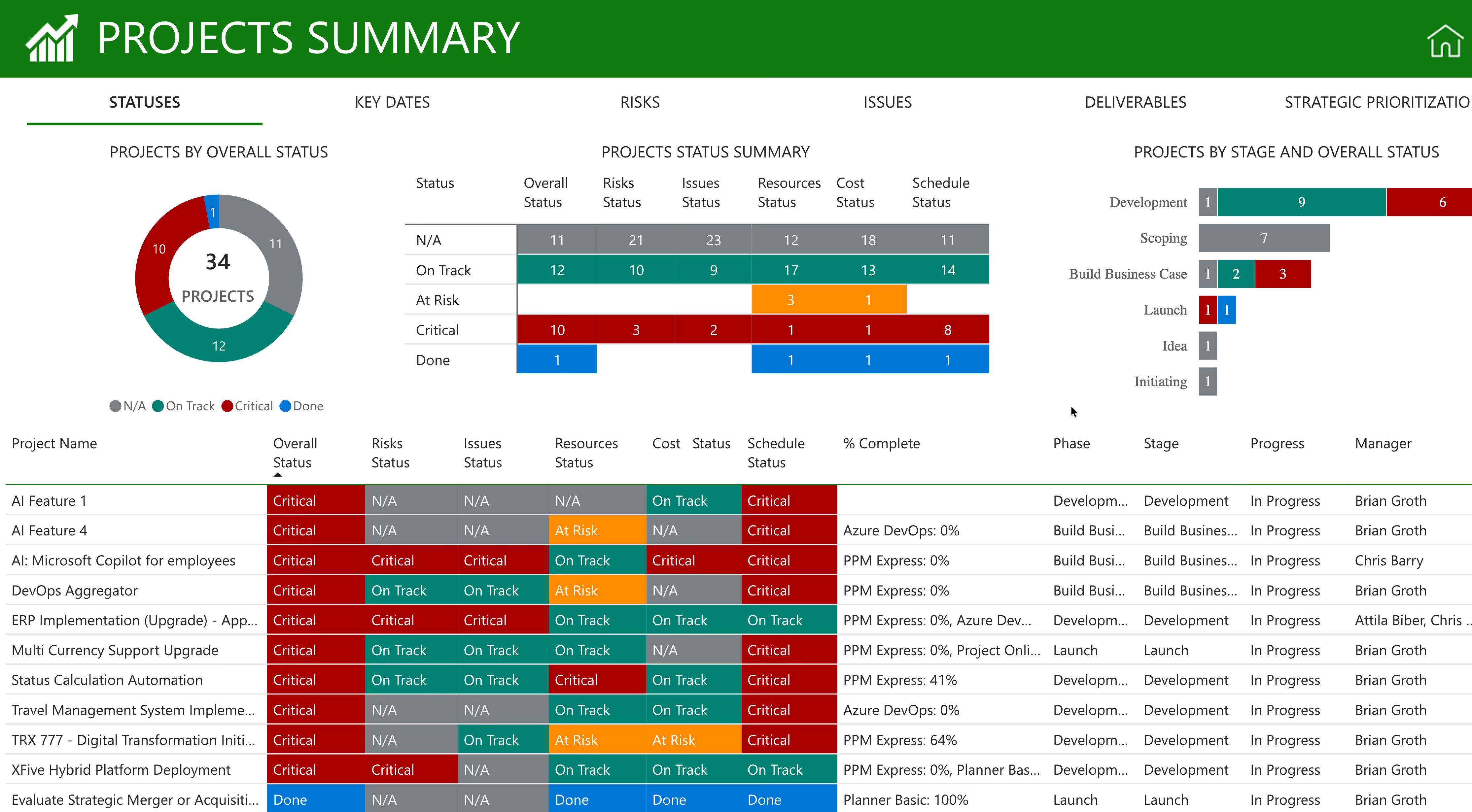
Jira work is reported next to everything else the enterprise delivers. If parts of the organization run Azure DevOps, Microsoft Project, Microsoft Planner, Smartsheet or Monday.com, those roll into the same portfolio and the same reports — no team migrates, and nobody maintains a sync layer between trackers purely to produce a leadership report.
Portfolio and project health, risks, issues, costs and capacity, ready to use rather than waiting to be built.
Jira alongside Azure DevOps, Microsoft Project, Planner, Smartsheet and Monday.com.
For executives, customers and external stakeholders — the same numbers, without a rebuild for each audience.
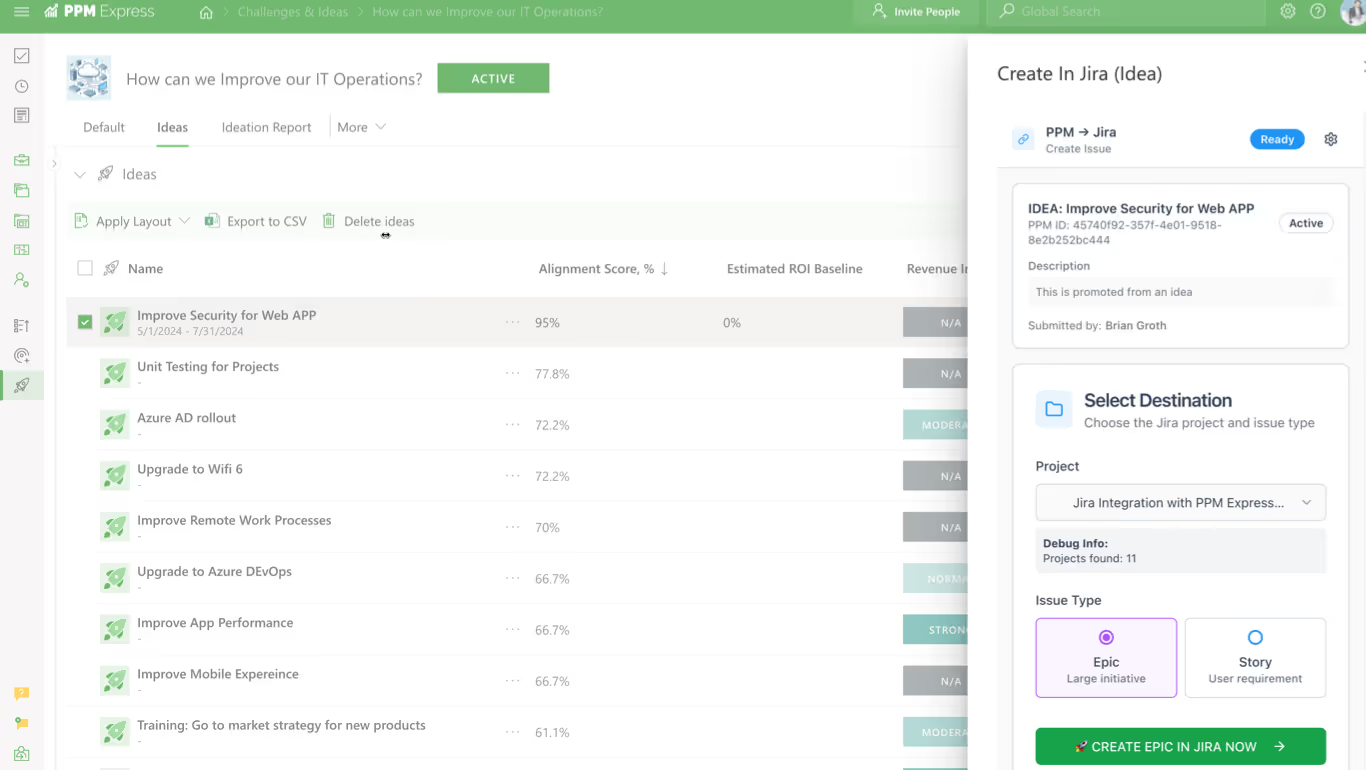
Most portfolio tools give you one integration and expect the estate to fit it. Jira connections in PPM Express are configured one at a time, so a division that wants the portfolio to stay read-only and a division that wants decisions to reach the backlog can both be right — and in two-way mode you decide which fields move and which way they go.
Jira projects, epics and stories are read into the portfolio and nothing is written back. Choose it when the boards are the single source of truth for delivery and you want the portfolio layer to observe rather than intervene. It is also the shortest path through a security review.
Two-way sync is available on the PPM Express Ultra plan. Any set of fields can sync, configured per connection. Choose it when decisions taken at portfolio level need to reach the backlog, or when initiatives start at leadership level and the resulting epics, stories and timelines need to be pushed into Jira. Two-way runs on the PMO Aggregator extension, which our team provisions for your tenant, and it syncs the items you have explicitly linked — worth scheduling at kickoff rather than discovering mid-rollout.
When the same field has changed on both sides, PPM Express shows you the conflict and asks which value wins — pull the Jira value, or push the portfolio one. Nothing is overwritten quietly.
Work-tracking data: epics, stories, tasks, sprints, dates and progress. No Bitbucket, no Confluence and no attachments. Jira Cloud is supported; the self-hosted products are not.

Enterprises that standardise delivery on Jira use PPM Express as the layer above it: portfolios and programs, funding and benefits, capacity and reporting — without asking a single squad to leave the board.
Leadership works from initiative dependencies, actual progress, timelines and milestones, with reporting generated automatically across portfolios and programs. Everything described on this page runs on live Jira data.
Not just what each program is doing, but what it is blocked behind — visible before it becomes a delay.
Read from the boards your squads are already updating, across every connected Jira project.
Automated across portfolios and programs, so leadership reviews the portfolio rather than requesting it.
Leadership cannot see portfolio and program status directly. Monthly reporting is manual and slow.
Epics and stories are planned in a spreadsheet, then created and updated in Jira by hand.
Engineering leads spend their week exporting and formatting data for other people.
Leadership reads the portfolio directly, and the monthly rebuild disappears along with the engineering time inside it.
The conversation moves from story points to who is genuinely free, and the collision is found in planning rather than in delivery.
The only people who need an account are the ones asking portfolio questions: engineering leadership, the PMO, finance partners.
PPM for Jira, answered.
Running a portfolio whose delivery data sits in Jira. Boards track execution well; what they do not hold is money, benefit, strategic value or organization-wide capacity. Project portfolio management supplies the first layer — status, dates, cost and capacity across every connected project. Strategic portfolio management supplies the second — objectives, investment categories, scored business cases and benefits realisation — so leadership can decide what to fund and sequence rather than only watch what is in flight.
Both are offered, and it is set per connection. One-way reads Jira projects, epics and stories into PPM Express and writes nothing back. Two-way, available on the Ultra plan, syncs the fields you map in the direction you choose — any set of fields, not a fixed list — so the portfolio reflects board activity and agreed changes reach the backlog. Two-way runs on the PMO Aggregator extension, provisioned for your tenant by our team, and applies to the items you have explicitly linked.
You do. Two-way connections are configured with a field mapping: you choose which fields are included and which direction each one moves. The system that should own a field keeps owning it, rather than the integration imposing a model on your estate.
It is surfaced as a conflict for a person to resolve — you review it and decide whether to pull the Jira value or push the PPM Express one. Nothing is overwritten silently, which matters when a date on a board and a date in a portfolio disagree for a reason.
Jira Cloud is supported. The self-hosted products, Jira Data Center and Jira Server, are not. If part of your estate still runs self-hosted Jira, that portion cannot be connected directly, and it is better to establish this early than to discover it during implementation.
Work-tracking data: epics, stories, tasks, sprints, dates and progress. There is no connection to Bitbucket, no access to Confluence and no access to attachments, which tends to shorten the security review considerably. Identity runs through Microsoft 365 or Okta SSO.
Yes, and it is a common reason enterprises adopt PPM Express. Both are supported connections and work from each rolls into one portfolio, alongside Microsoft Project, Microsoft Planner, Smartsheet and Monday.com. Neither group of teams migrates, and nobody maintains a sync layer between trackers purely to produce a leadership report.
No. Squads keep their boards, their sprints and their workflow, and PPM Express reads from them. The only people who need an account are the ones asking portfolio questions. A portfolio tool that makes delivery teams maintain a second set of records is a portfolio tool holding stale data by the end of the quarter.
Test it against capacity before it is committed. PPM Express calculates availability from the work week and calendar exceptions recorded for each person, allocates people to epics and initiatives in hours or percentage FTE, and flags overallocation while the quarter is still a proposal.
Yes. PPM Express is used by enterprises running hundreds of projects across multiple portfolios, with delivery split between Jira and other trackers. Leadership works from initiative dependencies, actual progress and milestones, with reporting automated across every portfolio rather than assembled per review.
Both, and most enterprises now need the two together. Project portfolio management asks whether the work in Jira is on schedule, on budget and properly staffed. Strategic portfolio management governs the decision behind it — which objective the initiative serves, which funding bucket it draws from, how it scored against the alternatives, and whether the benefit was realised once the epics closed. PPM Express covers both layers over the same Jira data, so the choice is not between delivery visibility and investment governance.

Weighted Prioritization Model for selecting right investment
Integrations

Capacity from real work weeks, so over-allocation surfaces before you commit.
Product

Structured Approach for prioritizing and aligning portfolios with strategic priorities and resource constraints
Product
Last updated 20 August 2026




.svg)


